Three dead, four missing as car plunges into Ganga
Three people died and four others went missing after an Innova SUV they were travelling in plunged into River Ganga on Tuesday.
Under the supervision of Acharya Balkrishna, the research team traveled extensively, reaching every village across four districts of Uttarakhand: Dehradun, Chamoli, Pithoragarh, and Udham Singh Nagar.




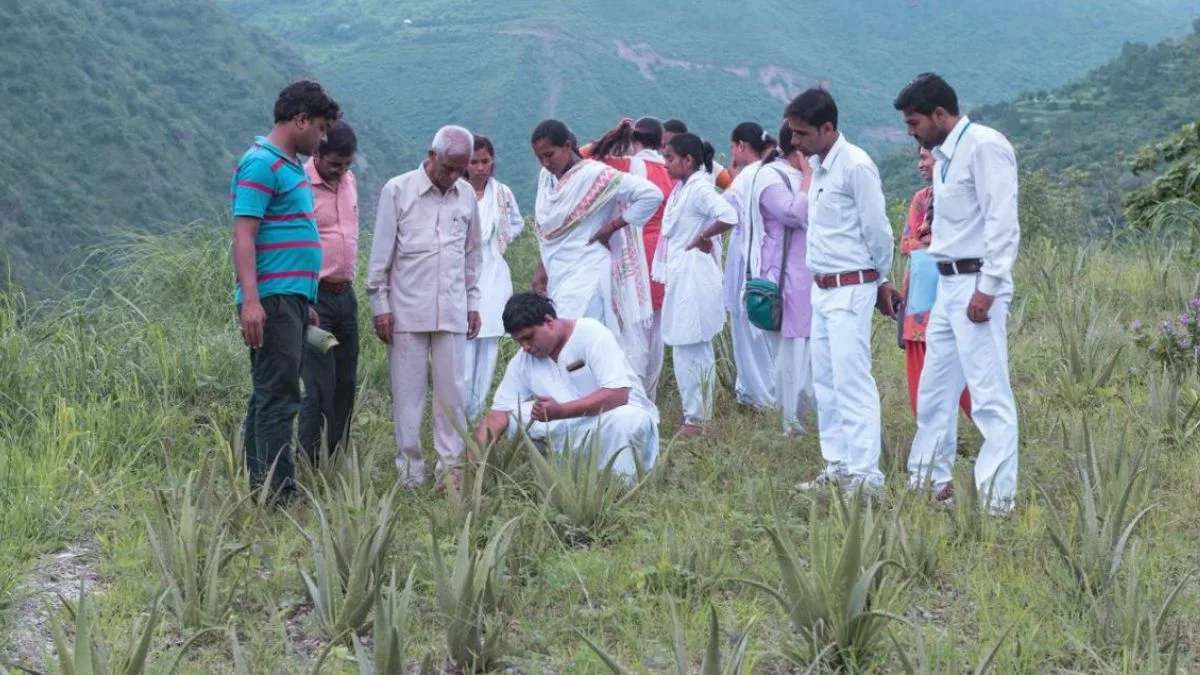
Acharya Balkrishna, along with his team, exploring tribal regions in search of medicinal plants.
In Uttarakhand, a total of 1,300 medicinal plants are listed in records. In a major study across tribal areas in four districts of the state, a team of scientists and researchers from Patanjali has discovered as many as 1,011 such plants and is now moving ahead to search for additional medicinal plants across all the 13 district of Uttarakhand.
So far, the team has yielded positive outcomes, with their findings having the potential to surpass the existing record of 1,300 medicinal plants currently known to exist in the state.
Advertisement
Under the supervision of Acharya Balkrishna, the research team traveled extensively, reaching every village across four districts of Uttarakhand: Dehradun, Chamoli, Pithoragarh, and Udham Singh Nagar. Significant insights came to the fore as the team started gathering information from the tribal communities. The team visited 122 villages and covered 14 tehsils (administrative blocks). By venturing into these remote areas, the researchers were able to interact directly with individuals who possess medicinal knowledge – accumulated and passed down through generations.
Advertisement
This exercise led to the identification of 216 tribal Ayurvedic practitioners, with each of them employing distinct methods of treatment. During interactions, 238 medicinal plants were scientifically documented. This achievement holds major significance as prior to this initiative, the general public was largely unaware of the existence of such plants.
This initiative highlighted the active participation of Uttarakhand’s major tribal communities: Jaunsari (39%), Bhotiya (36%), Tharu (10%), Bhoksa (9%), and Van Raji (6%).
The traditional knowledge regarding nature and medicinal flora with tribal communities constitutes an invaluable heritage for humanity. By reaching out to the tribal regions of Uttarakhand, Patanjali has initiated the task of scientifically preserving this fading legacy,” Acharya Balkrishna said in a statement.
To date, studies conducted in limited areas have led to the identification of 1,011 medicinal plants; currently, a team of Patanjali scientists is working round the clock across all 13 districts in search of new medicinal plants. The preliminary results have been extremely positive. Upon the complete compilation of data, a new and comprehensive picture of Uttarakhand’s medicinal flora is expected to emerge,” he added.
Tribal communities treated almost every ailment
During the study, the team observed that tribal communities were providing treatment for a wide range of ailments, including stomach aches, cold and cough, ear and throat infections, fever, diabetes, wounds and injuries, toothaches, diarrhea, malaria and dengue, piles, vomiting and dysentery, asthma, oral ulcers, bone fractures, kidney stones, and eye-related issues. Among these, the most frequently treated conditions in the tribal regions were joint pain and arthritis.
India’s first-ever Geo-Tagging of tribal communities
The Patanjali team faced significant challenges while gathering information in the five districts inhabited by these tribal communities. Due to their nomadic nature, many of these tribes did not have permanent settlements in a single location.
In this context, the Patanjali team undertook the geo-tagging of these indigenous and tribal families. While the government had previously estimated the presence of 50,000 tribal families in the region, it was Patanjali that accurately established the actual figure to be approximately 28,000 families.
Advertisement